How to talk about your weekend in Japanese
週末は友達と映画を見て、そのあとご飯を食べました。
shūmatsu wa tomodachi to eiga o mite, sono ato gohan o tabemashita.
“On the weekend I saw a movie with a friend, and then we had a meal.”
When: Telling a two-part weekend story
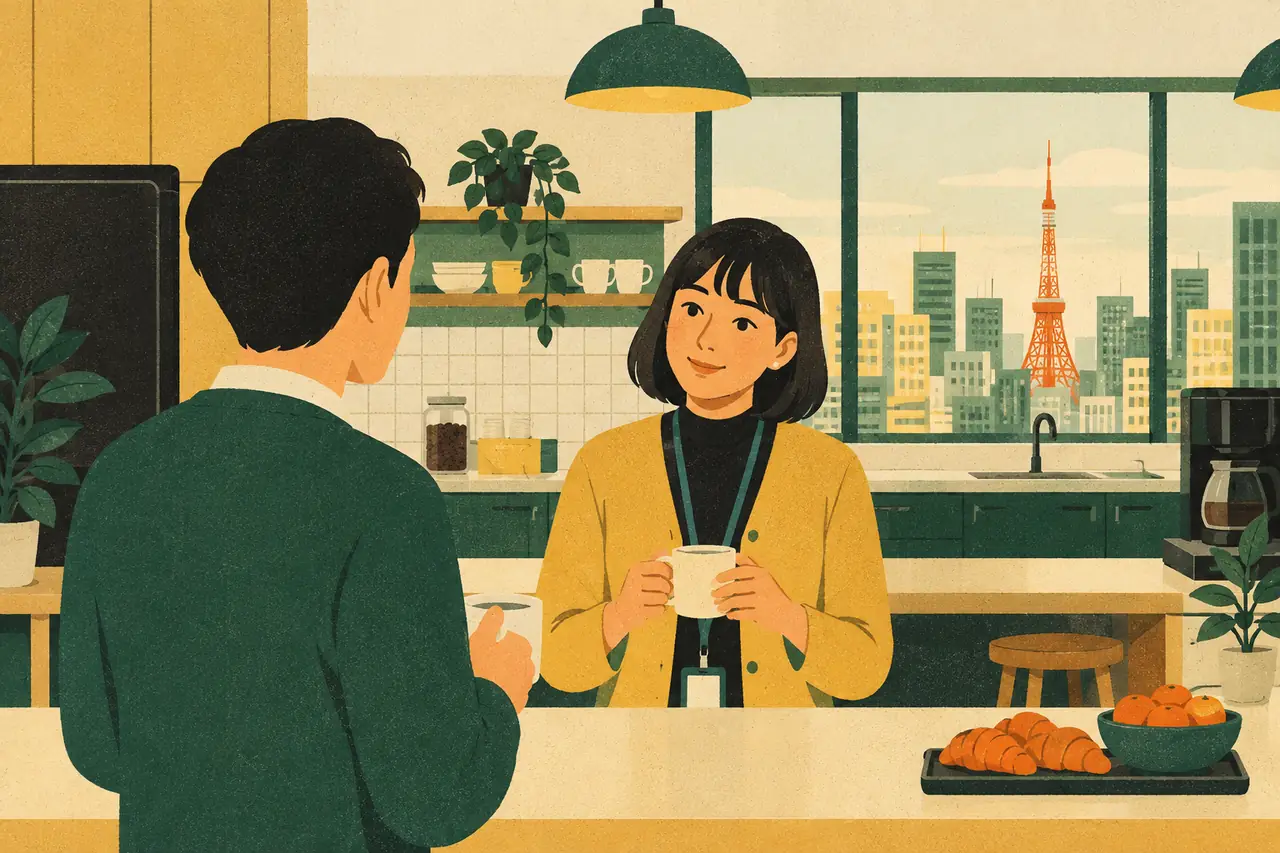
The moment
It is Monday morning at the office kitchen in Tokyo and a colleague asks how your weekend was. Give two or three things you did, then turn the question back on them.
A2 · Unit 4 · Small talk & stories
The lines
Two events in one breath
Join actions with the te-form and そのあと: 「週末は友達と映画を見て、そのあとご飯を食べました。」 Only the final verb carries the past tense.
週末は友達と映画を見て、そのあとご飯を食べました。
shūmatsu wa tomodachi to eiga o mite, sono ato gohan o tabemashita.
“On the weekend I saw a movie with a friend, and then we had a meal.”
When to use it: Telling a two-part weekend story
What you’ll hear back: いいですね。何の映画を見たんですか。 ii desu ne. nan no eiga o mita n desu ka. (Nice. What movie did you see?)
Passing the question back
「週末は何をしましたか。」 is the standard Monday opener. Swap 週末 for 昨日 or 連休 and the question still works.
週末は何をしましたか。
shūmatsu wa nani o shimashita ka.
“What did you do on the weekend?”
When to use it: Asking about their weekend
What you’ll hear back: 家でゆっくりしていました。 ie de yukkuri shite imashita. (I just took it easy at home.)
Words for this scene
| Japanese | Romaji | English |
|---|---|---|
| そうなんですか | sō nan desu ka | Oh, really? |
そうなんですか。それは楽しそうですね。 Oh really? That sounds fun. Tip: Let the tone rise; a flat delivery sounds bored. | ||
| 楽しかったです | tanoshikatta desu | It was fun. |
天気もよくて、楽しかったです。 The weather was good too, so it was fun. Tip: Never say 楽しいでした; i-adjectives take かった in the past. | ||
| 特に何もしませんでした | toku ni nani mo shimasen deshita | I didn't do anything special. |
先週末は特に何もしませんでした。うちで寝ていました。 I didn't do much last weekend. I slept at home. Tip: A normal, modest answer here; understatement is safe small talk. | ||
Your objective
Tell them two things you did at the weekend; when they ask about one, give a detail, then ask about their weekend and react.
- two things you did
- a detail when they ask more
- a question about their weekend
Lines that get it done
- 週末は友達と映画を見て、そのあとご飯を食べました。
- 楽しかったです · tanoshikatta desu · It was fun.
In the live scene the objective stays on screen, and the Replay afterwards says whether you got it done.
Check yourself
1. How do you say "I watched a movie with a friend and then we ate"?
- 友達と映画を見て、そのあとご飯を食べました。
- 友達と映画を見ました、そのあとご飯を食べます。
- 友達と映画を見て、そのあとご飯を食べます。
- 友達と映画を見ますて、そのあとご飯を食べました。
Show the answer
友達と映画を見て、そのあとご飯を食べました。
The te-form links the events and only the last verb is marked past.
2. Which question asks a colleague what they did at the weekend?
- 週末は何をしましたか。
- 週末は何をしますか。
- 週末は何ですか。
- 週末はどこですか。
Show the answer
週末は何をしましたか。
しましたか is the past form, so it asks about the weekend that has passed.
3. A coworker says they went to Hokkaido. What is the natural reaction?
- そうなんですか。いいですね。
- どういたしまして。
- おかげさまで。
- いただきます。
Show the answer
そうなんですか。いいですね。
そうなんですか shows interest and いいですね keeps the story going.