How to comfort a friend in Japanese
今日はなんだか静かですけど、何かありましたか。
kyō wa nandaka shizuka desu kedo, nanika arimashita ka.
“You seem quiet today. Did something happen?”
When: Starting a heart-to-heart with someone who looks low
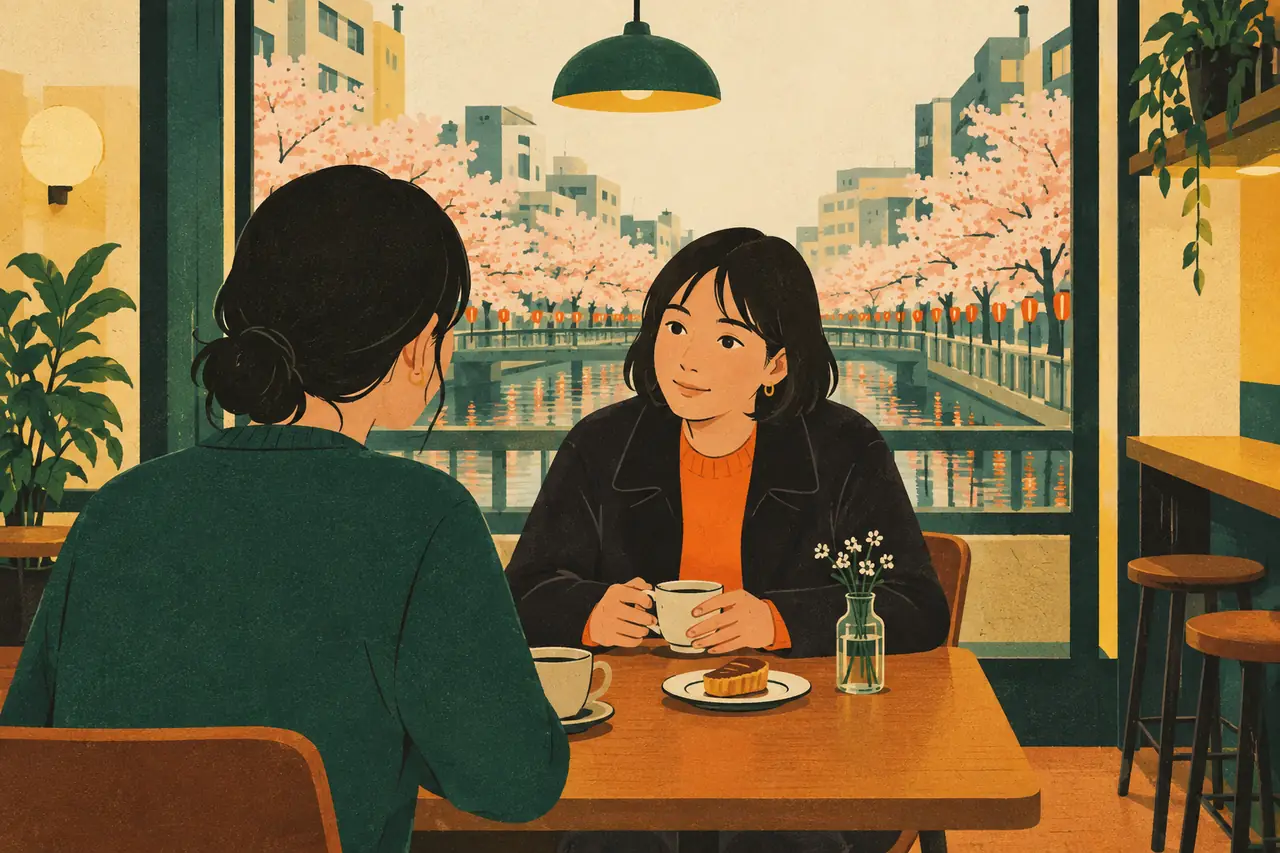
The moment
A friend has been quiet all evening at a café in Nakameguro. You draw out what happened, listen to the whole story, share a time something similar happened to you, and leave them with one piece of advice.
B1 · Unit 2 · Stories & feelings · Checkpoint
This is the unit’s checkpoint: one roleplay that puts the unit’s scenes together.
The lines
Drawing someone out
Open by naming what you notice, then leave the door open with けど: 「今日はなんだか静かですけど、何かありましたか。」 The けど leaves them free to brush it off or to start talking.
今日はなんだか静かですけど、何かありましたか。
kyō wa nandaka shizuka desu kedo, nanika arimashita ka.
“You seem quiet today. Did something happen?”
When to use it: Starting a heart-to-heart with someone who looks low
What you’ll hear back: 実は、ちょっと落ち込んでて…。 jitsu wa, chotto ochikonde te…. (Actually, I have been a bit down…)
Landing the advice
Once you have listened and shared your own story, close with a suggestion rather than an order: 「一度、本人に直接話してみたらどうですか。」 Keeping 一度 and 〜てみる makes it something they can try, not something they must do.
一度、本人に直接話してみたらどうですか。
ichido, honnin ni chokusetsu hanashite mitara dō desu ka.
“Why not try talking to them directly?”
When to use it: Wrapping up with one concrete suggestion
What you’ll hear back: そうですね、そうしてみます。 sō desu ne, sō shite mimasu. (You are right, I will give that a try.)
Words for this scene
| Japanese | Romaji | English |
|---|---|---|
| それは大変でしたね | sore wa taihen deshita ne | that must have been rough |
話してくれてありがとうございます。それは大変でしたね。 Thank you for telling me. That must have been rough. Tip: Say it before any advice; solutions offered too early feel cold. | ||
| そしたら | soshitara | and then, so then |
そしたら、急に連絡が来なくなったんです。 And then they suddenly stopped getting in touch. Tip: Your story pivot; hold a beat after it for effect. | ||
| 実は、私も同じようなことがあったんですよ | jitsu wa, watashi mo onaji yō na koto ga atta n desu yo | actually, something similar happened to me too |
実は、私も去年、同じようなことがあったんですよ。 Actually, something similar happened to me last year too. Tip: Keep your version short, then hand the floor straight back. | ||
Your objective
Get them to tell you what happened, share a time something similar happened to you, and give one piece of advice they can act on.
- a question to draw them out
- your own similar story
- a piece of advice
Lines that get it done
- 今日はなんだか静かですけど、何かありましたか。
- 実は、私も同じようなことがあったんですよ · jitsu wa, watashi mo onaji yō na koto ga atta n desu yo · actually, something similar happened to me too
- 一度、本人に直接話してみたらどうですか。
In the live scene the objective stays on screen, and the Replay afterwards says whether you got it done.
Check yourself
1. You are closing your own story with how it turned out. Which opener is right?
- 結局、その日は謝れませんでした。
- 最初は、その日は謝れませんでした。
- そしたら、その日は謝れませんでした。
- たとえば、その日は謝れませんでした。
Show the answer
結局、その日は謝れませんでした。
結局 marks the final outcome; 最初は and そしたら belong earlier in the story.
2. Your friend has just finished telling you something painful. What comes first?
- それは大変でしたね。
- 私だったら、そうしませんね。
- 一度、休みを取ってみたらどうですか。
- 結局、どうなったんですか。
Show the answer
それは大変でしたね。
Acknowledge the feeling first; opinions, suggestions and follow-up questions all come after.
3. Before suggesting a doctor, you want to check they have not already been. Which do you ask?
- 病院にはもう行ってみましたか。
- 病院にはもう行ってみたらどうですか。
- 病院にはもう行かないほうがいいですよ。
- 病院にはもう行くつもりですね。
Show the answer
病院にはもう行ってみましたか。
もう〜てみましたか asks whether they have already tried it, instead of advising straight away.