How to return something broken in Japanese
先週買ったばかりなんですが、電源が入らなくなってしまって。
senshū katta bakari na n desu ga, dengen ga hairanaku natte shimatte.
“I only bought it last week, but now it won't turn on.”
When: Handing the item over at the service counter
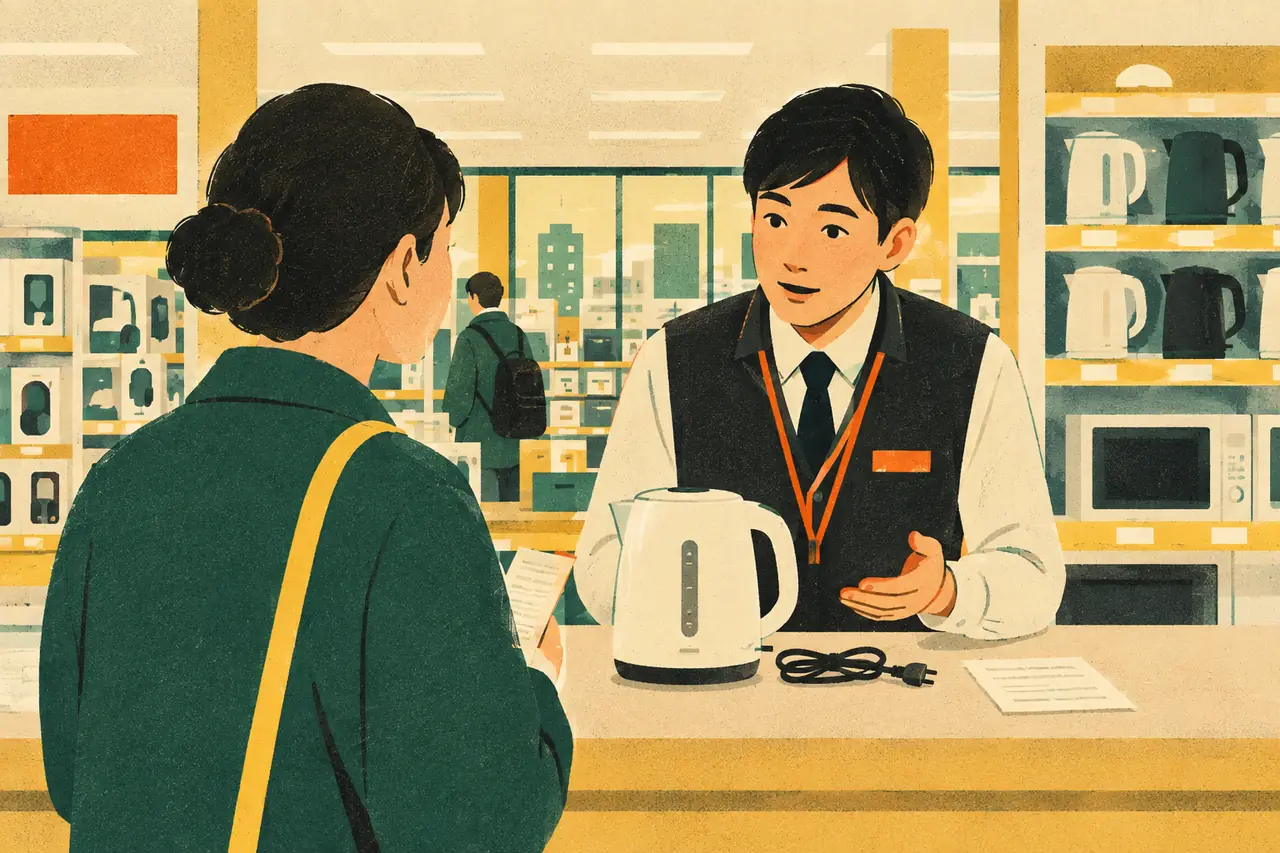
The moment
The electric kettle you bought at a Bic Camera in Ikebukuro last week has stopped turning on. You take it back with the receipt and want a replacement or a refund, not a three-week repair.
B1 · Unit 3 · Practical adulting
The lines
What broke, and when
Lead with how new it is (買ったばかり), then let the sentence trail off on 〜てしまって: 「先週買ったばかりなんですが、電源が入らなくなってしまって。」 The unfinished ending sounds troubled rather than accusing.
先週買ったばかりなんですが、電源が入らなくなってしまって。
senshū katta bakari na n desu ga, dengen ga hairanaku natte shimatte.
“I only bought it last week, but now it won't turn on.”
When to use it: Handing the item over at the service counter
What you’ll hear back: 申し訳ございません。レシートはお持ちでしょうか。 mōshiwake gozaimasen. reshīto wa o-mochi deshō ka. (I'm terribly sorry. Do you have the receipt with you?)
Not a repair — a swap
Reject their offer and name yours in one move: 「〜ではなく、〜をお願いできないでしょうか。」 The negative question ending keeps a firm demand sounding humble.
修理ではなく、交換か返金をお願いできないでしょうか。
shūri de wa naku, kōkan ka henkin o onegai dekinai deshō ka.
“Rather than a repair, could I have an exchange or a refund?”
When to use it: When they offer to send it for repair
What you’ll hear back: 少々お待ちください。店長に確認してまいります。 shōshō omachi kudasai. tenchō ni kakunin shite mairimasu. (One moment please. I'll go check with the store manager.)
Words for this scene
| Japanese | Romaji | English |
|---|---|---|
| 初期不良 | shoki furyō | a factory defect, faulty from new |
買って三日で動かなくなったので、初期不良だと思うんですが。 It died three days after I bought it, so I think it's faulty from new. Tip: Within a week or two this word usually earns a swap. | ||
| まだ保証期間内だと思うんですが | mada hoshō kikannai da to omou n desu ga | I believe it's still within the warranty period. |
去年の暮れに買ったので、まだ保証期間内だと思うんですが。 I bought it late last year, so I think it's still under warranty. Tip: Bring the 保証書 card; the receipt alone may not count. | ||
| 責任者の方とお話しさせていただけますか | sekininsha no kata to ohanashi sasete itadakemasu ka | Could I speak with the person in charge? |
恐れ入りますが、責任者の方とお話しさせていただけますか。 Sorry to trouble you, but could I speak with the person in charge? Tip: Keep your voice low; volume ends negotiations in Japan. | ||
Your objective
Say when you bought it and what stopped working, and make your case for a replacement or a refund.
- when you bought it
- what stopped working
- a replacement or a refund
Lines that get it done
- 先週買ったばかりなんですが、電源が入らなくなってしまって。
- まだ保証期間内だと思うんですが · mada hoshō kikannai da to omou n desu ga · I believe it's still within the warranty period.
In the live scene the objective stays on screen, and the Replay afterwards says whether you got it done.
Check yourself
1. Your week-old kettle won't power on. Which explanation sounds most natural?
- 先週買ったばかりなんですが、電源が入らなくなってしまって。
- このやかんは壊れています。新しいのをください。
- 電源が悪いですから、直してください。
- 先週買いました。でも動きません。どうしてですか。
Show the answer
先週買ったばかりなんですが、電源が入らなくなってしまって。
買ったばかり plus a trailing 〜てしまって is the standard, non-confrontational way to report a fault.
2. They offer a repair, but you want a replacement or your money back. What do you say?
- 修理ではなく、交換か返金をお願いできないでしょうか。
- 修理はだめです。お金を返してください。
- 修理と交換と返金、どれがいいですか。
- 修理してもいいですけど、返金します。
Show the answer
修理ではなく、交換か返金をお願いできないでしょうか。
〜ではなく、〜をお願いできないでしょうか declines their option and names yours while staying polite.
3. The clerk refuses and you want to escalate. Which is the polite move?
- 恐れ入りますが、責任者の方とお話しさせていただけますか。
- 店長を呼んでください。早くしてください。
- あなたでは話になりませんね。
- もっと偉い人はいませんか。
Show the answer
恐れ入りますが、責任者の方とお話しさせていただけますか。
恐れ入りますが plus 〜させていただけますか escalates without any hint of anger.